
Christmas freight peak: hire your drivers in October
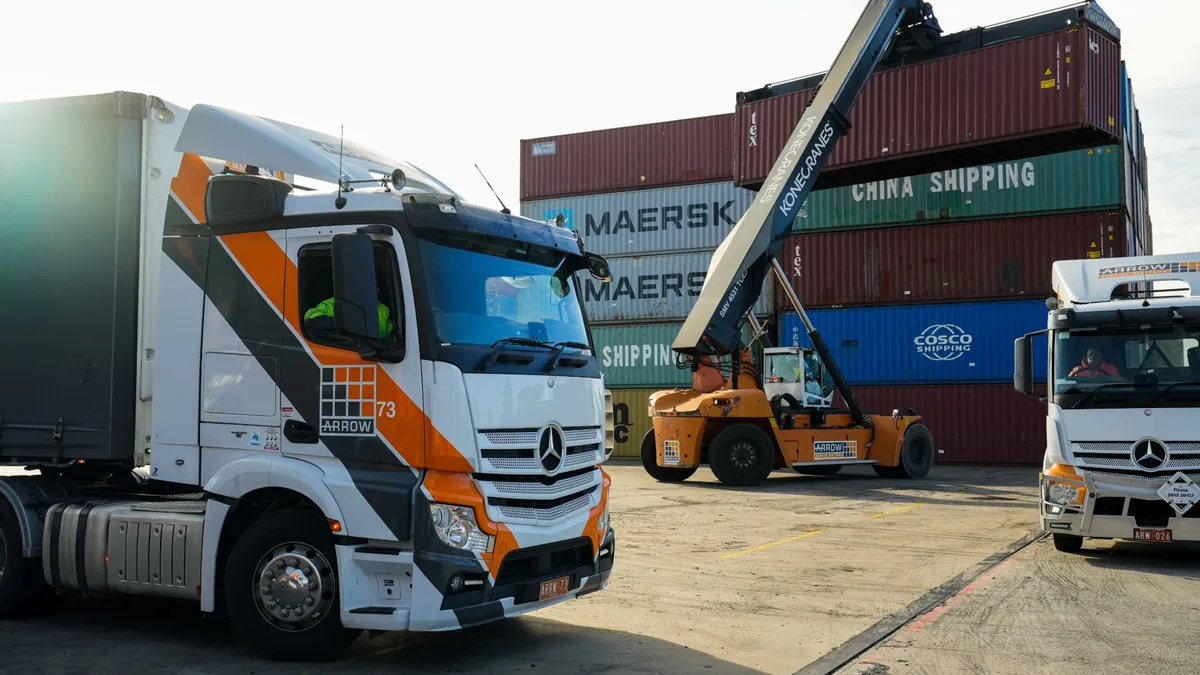
A transport operator should brief its permanent driver roles in the first two weeks of October, ten to twelve weeks before the December surge. From late August the largest freight networks pull thousands of licensed drivers into seasonal roles, so the pool of HC and MC drivers with clean work diaries shrinks weekly, and a permanent hire still needs a notice period, checks and an induction before day one.
What we’ll cover:
- The peak calendar, worked backwards from the first surge week.
- What a driver brief needs so a recruiter can fill it properly.
- The fatigue duty that changed on 1 August 2026 and applies to every new starter.
The peak calendar runs backwards from the first surge week
The largest freight network in the country does not wait for November. Australia Post and StarTrack put their 2026 call out on 23 August: more than 3,500 seasonal roles, truck drivers starting early September, forklift operators, freight handlers and parcel processors from mid-October, with the biggest counts in Victoria, New South Wales and Queensland, after a previous peak that moved a record 111 million parcels (Nine.com.au, 23 August 2026).
That is seasonal hiring at national scale, and it is the competition for every permanent driver you want to put on. A linehaul run out of Laverton North or a container yard at Port Botany draws from the same pool of people. The difference is what you are offering: a job that runs past January. Work backwards from the week your volumes lift.
| Weeks before surge | What happens | Who does it |
|---|---|---|
| 12 to 10 (early October) | Volume forecast by lane and shift. Permanent roles written up by licence class, vehicle and shift pattern. Brief sent to the recruiter. | Operations manager and fleet manager |
| 10 to 8 (mid October) | Candidates sourced, interviewed and reference-checked. Licence, ticket and work diary checks. Fatigue hours option confirmed per driver. Notice periods mapped. | Recruiter |
| 8 to 6 (late October) | Offers made and accepted. Notice periods running. Site inductions booked for the week before each start. | Recruiter and site supervisor |
| 6 to 4 (November) | First new drivers on the road, learning the runs while volumes are still normal. Second brief if the forecast has moved. | Operations manager |
| 4 to 0 (late November into December) | Full permanent roster, every driver inducted and settled. Daily check-ins through the surge. | Allocator and operations manager |
The licence check is quick. Notice periods and inductions are not, because they depend on the driver’s current employer and your site’s availability. That is why the brief goes out in October.
A driver brief a recruiter can fill
Most peak briefs read “need six drivers, HC, starting Monday”, and fill slowly because the recruiter has to ring back four times. A brief that fills fast has eight lines.
- Licence class per role: MR, HR, HC or MC, and whether an MC driver is running B-double or road train.
- Vehicle and load: rigid, semi, tautliner, side loader, refrigerated, container. Drivers self-select on this line.
- Shift pattern: start time, finish time, days, and whether the pattern changes over peak.
- Fatigue hours option: standard hours, Basic Fatigue Management or Advanced Fatigue Management. This decides which drivers are eligible before anyone looks at a resume.
- Site requirements: white card, MSIC for wharf cartage, your own induction, any client-site induction on the run.
- Start date, and the latest start you can live with, so the recruiter knows which notice periods are workable.
- Award classification: which grade under the Road Transport and Distribution Award the role sits at (Fair Work Ombudsman award summary MA000038).
- The name and mobile of the manager the driver will report to at 4am.
Send those eight lines in the first week of October and a recruiter that knows transport can start ringing drivers the same day.
Fatigue rules changed on 1 August 2026 and they apply from a new driver’s first shift
Under the Heavy Vehicle National Law, a solo driver on standard hours can work a maximum of 12 hours in any 24, with seven continuous hours of stationary rest; Basic Fatigue Management lifts that to 14 hours in 24 for accredited operators (NHVR, work and rest hours). Since 1 August 2026 there is a further duty on top: a driver must not drive any heavy vehicle over 4.5 tonnes GVM while impaired by fatigue or unfit to drive, even inside their permitted hours (NHVR).
Peak is when that duty gets tested: extra runs, earlier starts, new drivers learning unfamiliar routes. In August the NHVR reported the results of its March national fatigue operation: more than 6,100 heavy vehicles intercepted, fatigue non-compliance up to 5.3 percent, and false or misleading work diary offences up more than 42 percent on the previous operation (NHVR, 19 August 2026).
Under Chain of Responsibility, every party who influences the transport task carries a primary duty to ensure safety so far as is reasonably practicable (NHVR). A permanent driver placed by a recruiter is your employee from day one, so the duty is yours. What the recruiter owes you before that day is proof: that the driver holds the licence class on the brief, is eligible for the hours option you run, and has a current work diary with a clean history.
Ask your recruiter one question in October: which fatigue hours option is each candidate eligible for, and how do you know. If the answer is a pause, brief someone else.
Why a permanent hire beats a seasonal one at peak
Seasonal crews leave in January. The operators we talk to describe the same fortnight before Christmas every year: show-up rates drop, the half committed stop answering, and the supervisor spends the busiest week of the year re-rostering. A permanent driver hired in October has a roster, a manager who knows their name, three weeks of your runs behind them before the surge, and a reason to be there in February.
That is also why the brief carries leave. Ask each candidate in the interview what they have planned between 20 December and 10 January, put the answer in the offer, and build the surge roster around it in October. A permanent team with leave planned beats a seasonal one with none.
Worked example: a linehaul operator out of Toowoomba
A family-owned operator runs twelve prime movers out of Toowoomba into the Brisbane markets and the Port of Brisbane. Peak for them starts the second week of November when produce volumes and pre-Christmas container work overlap.
In the first week of October the operations manager sends an eight-line brief: four permanent HC drivers on standard hours for the Brisbane market run, two permanent MC drivers under Basic Fatigue Management for the B-double port run, all with MSIC for the wharf, day shift starting 3:30am, start dates from 10 November, Grade 7 and Grade 8 under the award.
The recruiter shortlists eight, interviews them in week two with the operations manager in the room for the last round, and makes six offers by the third week of October. Two drivers are on two-week notice and start early November; four are on four-week notice and start the week of 10 November, each inducted at the yard the day before their first run. By the first surge week all six have driven the Brisbane run at normal volumes. When one HC candidate withdraws before start, the recruiter goes back to the two runners-up the same day.
Nothing in that example is clever. It is the calendar, followed.
Our position
If a recruiter is still filling your permanent driver roles in November, the shortlist is whoever the seasonal networks did not want. A driver who signs in October is inducted before the surge, knows your runs by December, and is still on your roster in February. That is the hire worth making.
What EL Workforce does about it
We place permanent drivers, forklift operators, allocators, supervisors and managers with transport, logistics and construction businesses across VIC, NSW, QLD and WA, and every person we put forward has been through five checks before they reach your gate: registration, onboarding, role checks, a site-specific induction where your site needs one, and a follow-up once they start. Permanent means permanent: they are your employee from day one.
Send Ebony the eight lines for your peak roles at ebony@elworkforce.com.au, or use the form below. If you are hiring every peak and every EOFY, ask about RPO, where one monthly investment covers the whole recruitment function.
Sources
- Nine.com.au, 23 August 2026, Australia Post puts out call for 3500 seasonal workers ahead of Christmas: https://www.nine.com.au/australia-news/australia-post-office-call-for-seasonal-workers-truck-drivers-forklift-operators-20260824-p60qv2.html
- National Heavy Vehicle Regulator, Work and rest hours: https://www.nhvr.gov.au/safety-accreditation-compliance/fatigue-management/work-and-rest-hours
- National Heavy Vehicle Regulator, 19 August 2026, Fatigue crackdown reveals rise in false and misleading records: https://www.nhvr.gov.au/news/2026/08/19/fatigue-crackdown-reveals-rise-in-false-and-misleading-records
- National Heavy Vehicle Regulator, Chain of Responsibility: https://www.nhvr.gov.au/safety-accreditation-compliance/chain-of-responsibility
- Fair Work Ombudsman, Road Transport Award MA000038 summary: https://www.fairwork.gov.au/employment-conditions/awards/awards-summary/ma000038-summary
FAQ
When should I start hiring drivers for the Christmas peak in Australia?
Brief your recruiter in the first two weeks of October, ten to twelve weeks before your volumes lift. The largest networks open seasonal driver roles in late August with starts in early September, so the pool of licensed drivers with clean work diaries shrinks every week from then. October leaves time for interviews, notice periods, checks and an induction before the surge.
What licence class do I need for a peak driver?
It depends on the vehicle. MR covers medium rigid trucks, HR heavy rigid, HC a prime mover with one trailer, and MC multi-combination vehicles such as B-doubles and road trains. Put the class and the vehicle on the brief. A recruiter that knows transport will only shortlist drivers who hold the class and have driven that combination.
Do new drivers have to follow the same fatigue rules?
Yes. Work and rest limits under the Heavy Vehicle National Law apply to every driver of a fatigue-regulated heavy vehicle from their first shift. Since 1 August 2026 a driver must also not drive any heavy vehicle over 4.5 tonnes while impaired by fatigue, even inside their hours. Confirm each driver's hours option before the roster is built.
Should I hire permanent drivers before peak or bring in seasonal staff?
Hire permanent drivers in October. Seasonal staff leave in January and the fortnight before Christmas is when they stop turning up. A permanent driver hired in October is inducted, knows your runs before the surge and is still on the roster in February. Put planned leave in the offer and roster around it.
How long does it take to recruit a permanent truck driver?
Count in weeks. Sourcing and interviews take the first fortnight, then licence, reference and work diary checks, then the candidate's notice period, which is commonly two to four weeks for a permanent driver. Add the induction the day before the first run. A brief sent in early October lands drivers on the road in November.